Concrete Afterlife
As part of Periscopes 2026 office trip to Hamburg we visited the Energiebunker. Originally constructed in the Second World War and used as a flak tower, it was adapted in 2012 as part of the International Building Exhibition in Hamburg and is now a sustainable heating plant for the surrounding neighbourhood. The building holds a two-million-litre capacity water reservoir which stores warmth from the biomass-fuelled plant and solar panels, which subsequently generates electricity. The central space holding the water came into existence due to explosions shortly after the end of the war destroying the internal structure.
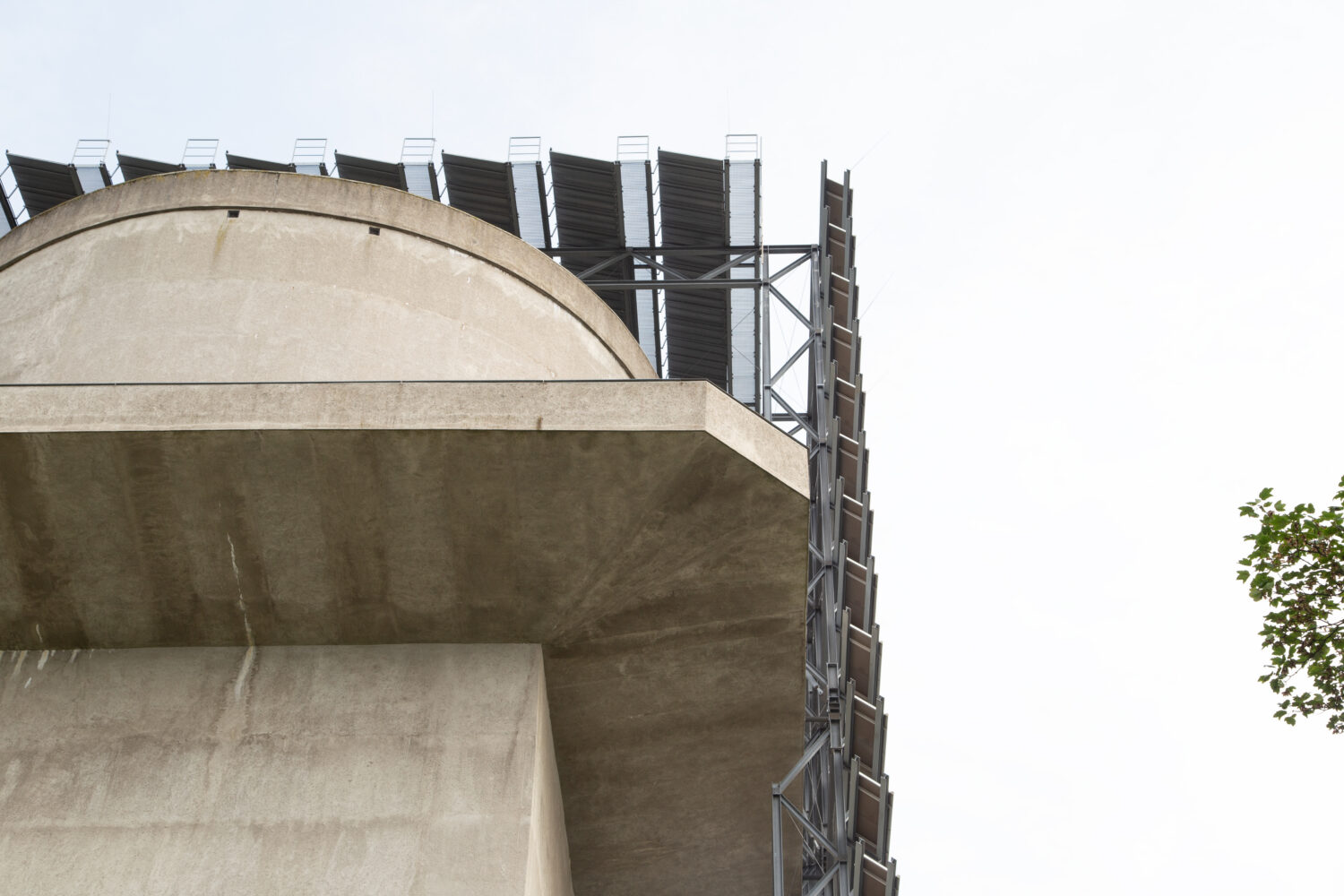
Solar panels mounted on the bunker’s exterior
Approaching the Energiebunker from the south, its monolithic concrete surface gradually becomes visible through the surrounding trees. Only at close range does the full scale and solidity of the structure become apparent as it rises above the park. The refurbishment of the publicly accessible areas is restrained. Their principal attractions comprise information panels on the structure’s difficult history and its current reuse as a sustainable power plant, panoramic views from the roof, and a small café serving afternoon tea. Limited views into the plant’s internal operation are provided, which could have been developed further to help visitors understand its current function through tactile and interactive interpretation as well as diagrams. The project’s success lies in its provision of sustainable energy to the local community, the sensitive adaptation of a former fascist symbol, and its demonstration that large-scale energy infrastructure can be integrated into the semi-urban fabric.
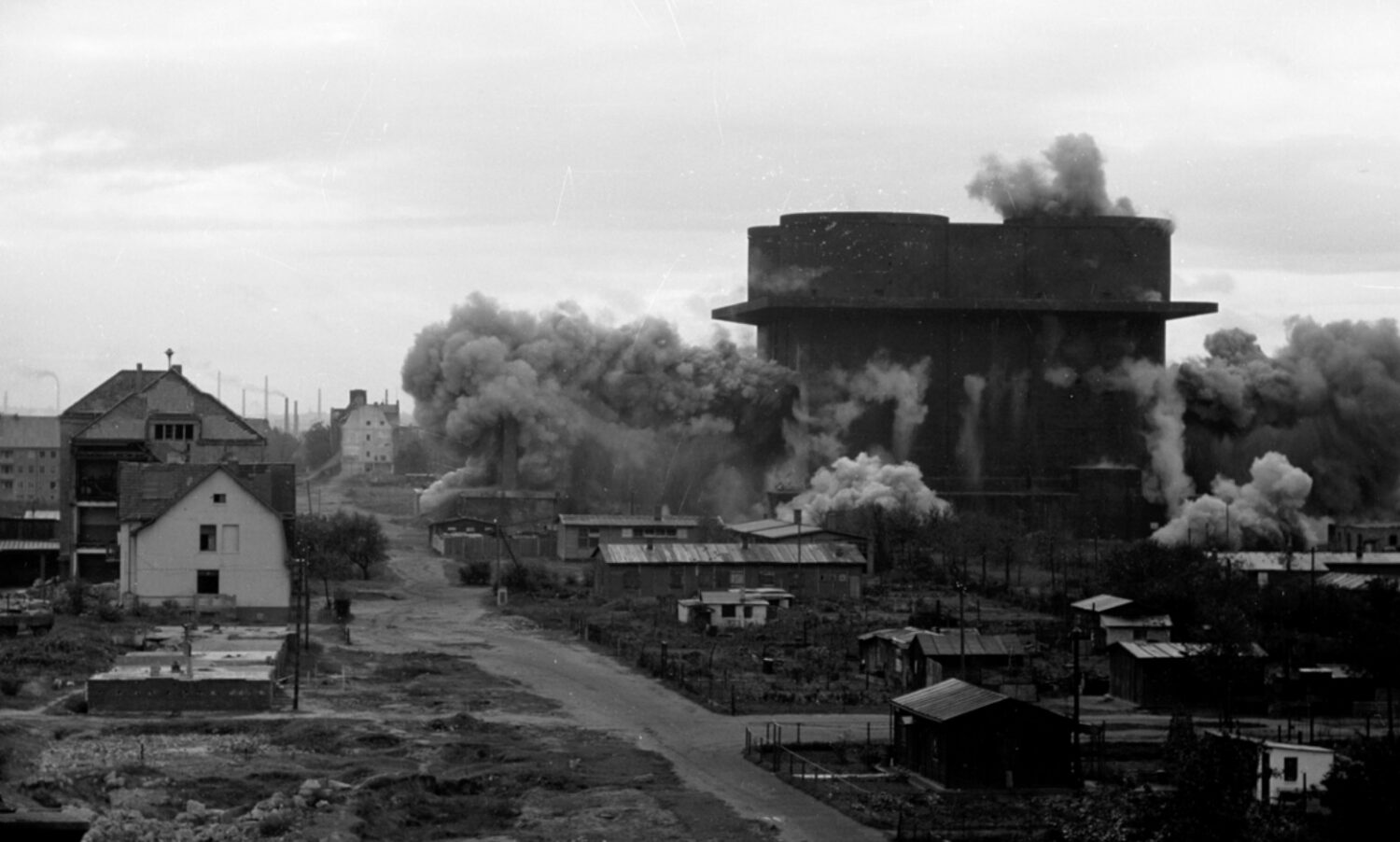
Blasting operation at the bunker in 1947