Material Memories
The Hannoverscher Bahnhof is a site where over 8,000 Jews, Sinti, and Roma were deported to concentration camps during World War II, today located within the Lohse Park in Hafencity, and in 2017 a memorial was built in commemoration, designed by VOGT.
Visiting the Hannoverscher Bahnhof Memorial nearly nine years after completion meant we were able to witness how the landscape has matured over time. The success of the planting growing through the existing railway ballast was clear: when you compare the project photographs on VOGT’s website with Periscope’s photographs from September 2026, you see two very different projects. The planting includes birches, robinias and wild roses—all pioneer species commonly found on areas of track ballast. The place feels understated and restrained, ensuring the memorial maintains a strong connection to the site’s past. The height and character of the established birch trees around the perimeter of the preserved station transforms the platform area itself into an open space with a protective boundary. Tables made of concrete and glass contained the names of 8,000 deportees, a simple but effective method of remembrance.
The project demonstrates how landscape can create a resonant setting for reflection, without relying solely on formal interpretation methods. A key lesson learnt is to embrace the material character of sites in a way that references their past; this could be particularly relevant when working on industrial or infrastructural sites in the UK. The Hannoverscher Bahnhof Memorial is also a good reminder to visit and photograph completed projects years, even decades, after their completion, when planting has matured and sites have traces of use.
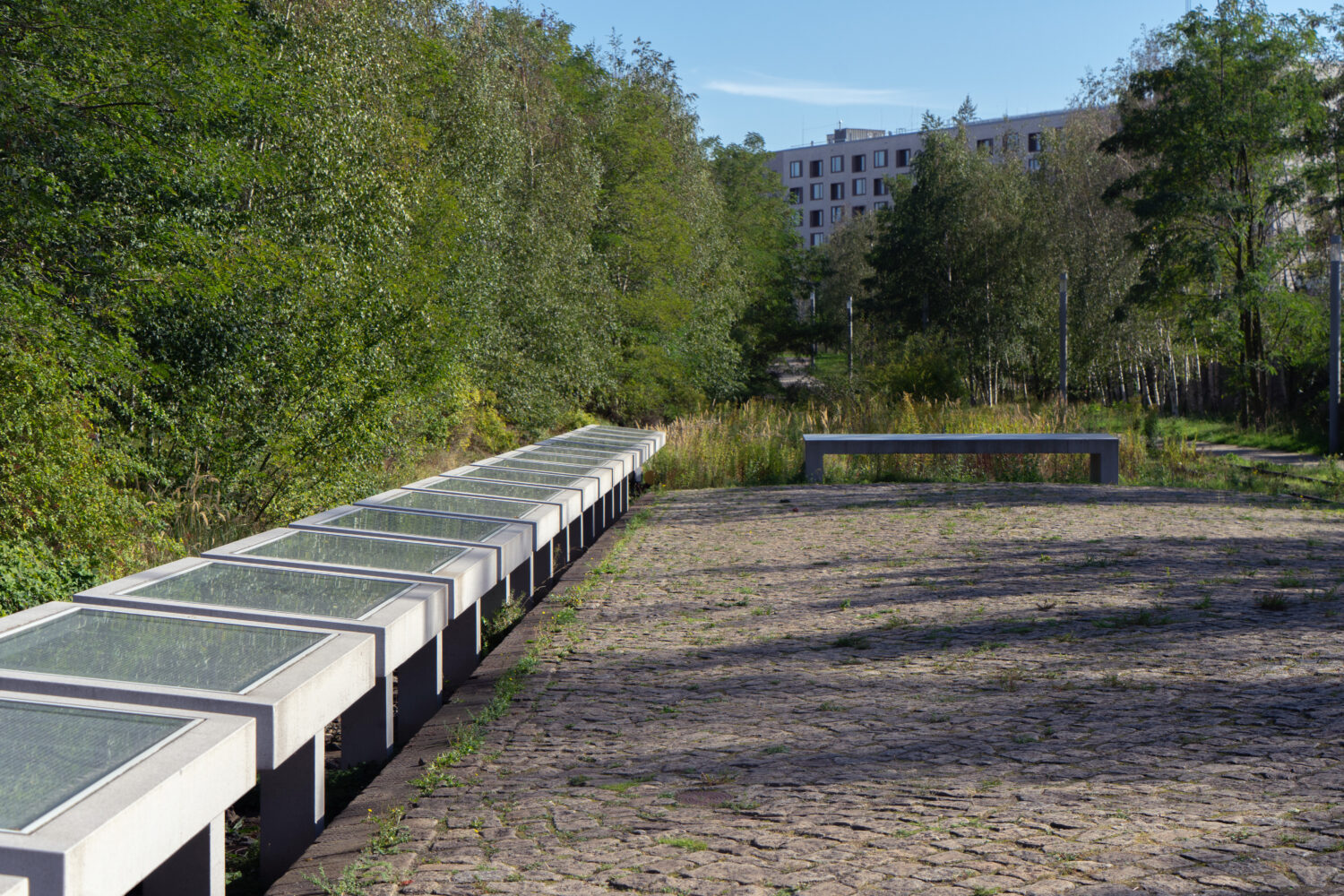
Cobbled central square with concrete and glass tablets containing the names of the 8,000 Jews, Sinti and Roma deported from the site
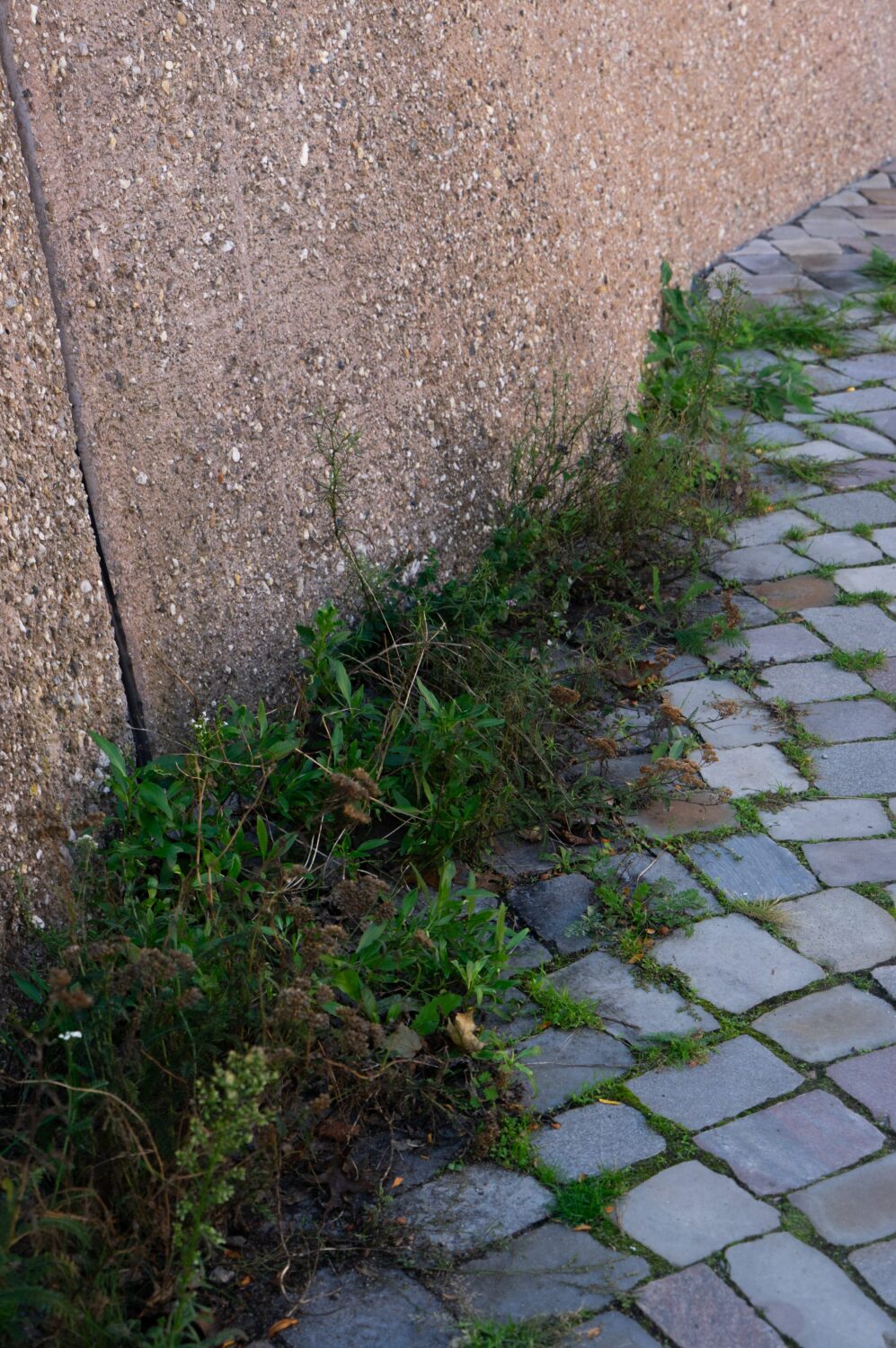
Planting colonising surfaces
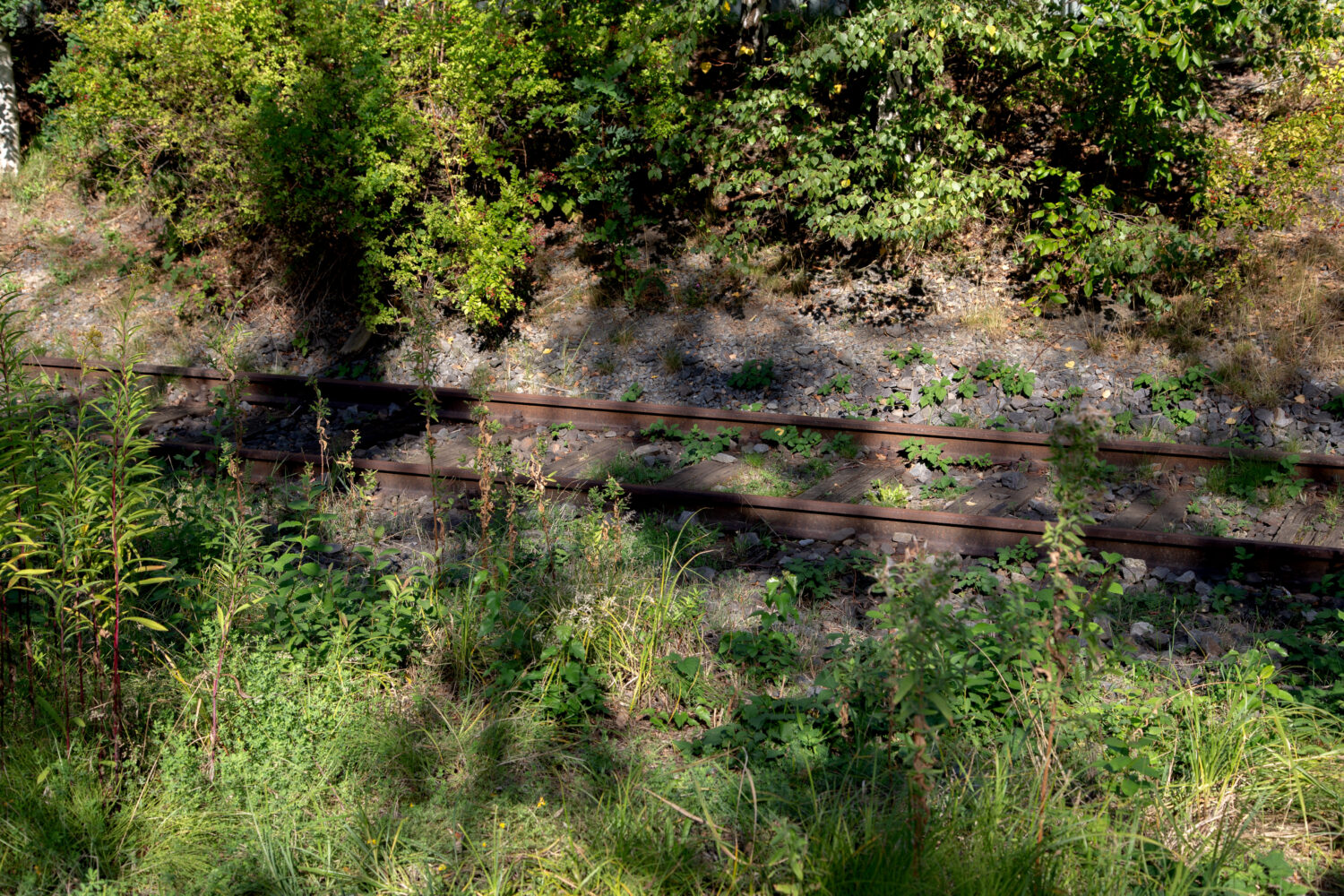
The preserved historic railway track
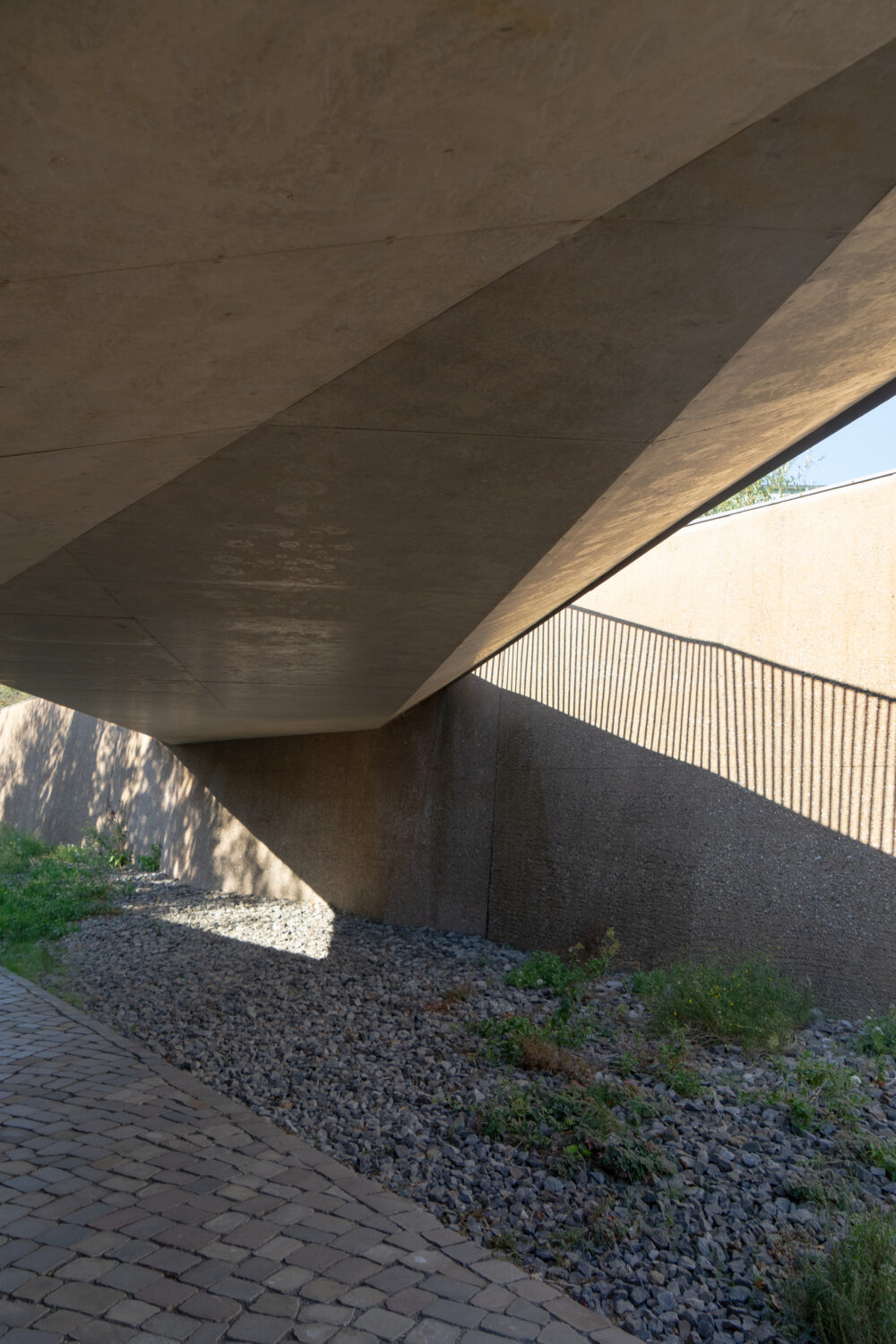
Undulating concrete-cast bridge